
Afflictions change how you fight: Stiff Back III replaces dodge rolls with a short lunge. When you need healing between rounds, you must accept an affliction in exchange. Chained Beasts afflictions include over 70 physical and mental effects, so choose the drawback you can fight around rather than judging a remedy only by its healing.
How do afflictions affect movement and throwing?
Afflictions can replace your dodge, delay movement inputs, spoil throws, or make continued movement hurt. At the Healer, read the effect text and its Roman numeral; skulls indicate severity, not damage values.
| Affliction | Effect at this level | What to change |
|---|---|---|
| Stiff Back III | Dodge rolls become a short lunge. | Plan your escapes around the lunge instead of your usual roll. |
| Dislocated Shoulder II | You often flub throws. | Avoid it if throwing is central to your damage. |
| Open Leg Wound II | After moving a great distance in a battle, you start taking damage when moving. | Cut unnecessary laps around the arena. |
| Brain Fog I | Movement input has a tiny delay. | Leave more time to react and reposition. |
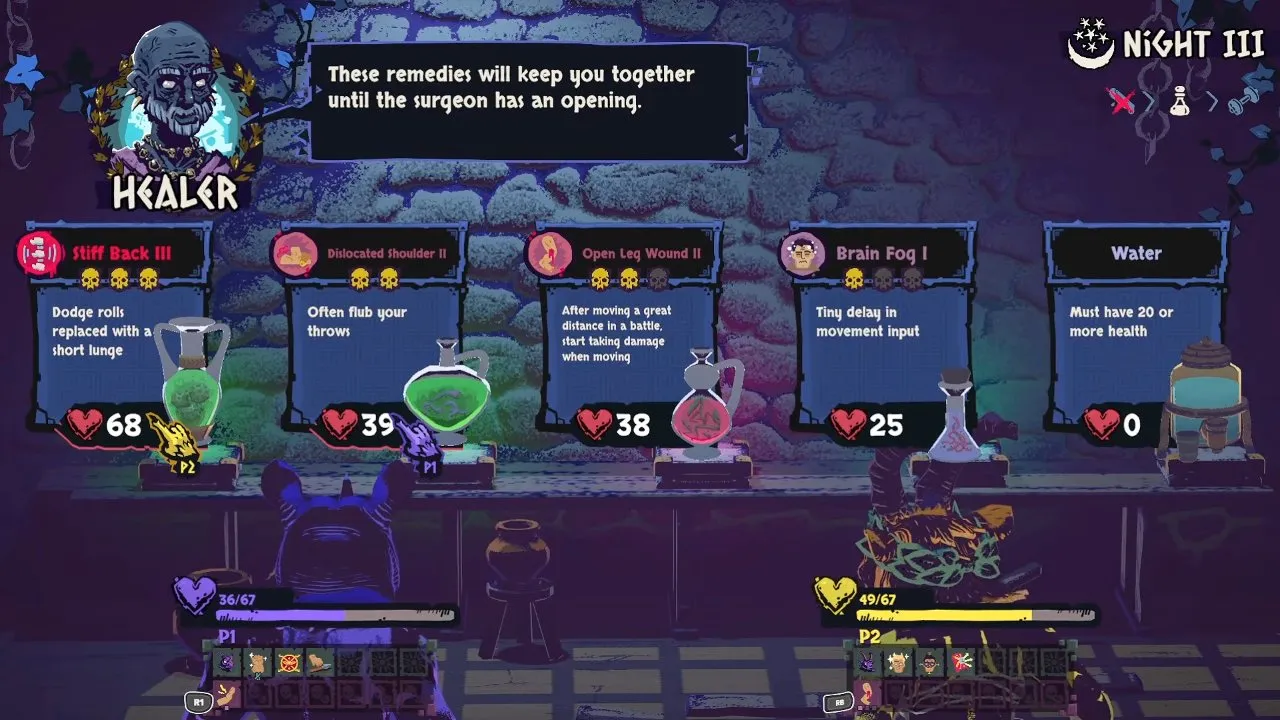
These drawbacks punish different habits. A limp slows movement, while Open Leg Wound II punishes movement after you have covered a great distance in that battle. Treating every leg injury as just a speed penalty can leave you taking damage while trying to stay safe.
Which affliction should you choose when healing?
Choose the drawback that interferes least with how you currently fight. One player picked Dislocated Shoulder II because they were not throwing, while rejecting the short lunge and movement delay as worse fits for their playstyle.
- Read what the remedy changes before accepting it.
- Compare that effect with your main attacks and escape habits.
- Check the severity, then decide whether the healing is worth that particular restriction.
For a fighter who rarely throws, Dislocated Shoulder II can be a more manageable choice than losing a familiar dodge. For a throwing build, that same shoulder injury directly undermines your attacks. Open Leg Wound II is also a rough bargain if your survival plan depends on constantly circling enemies.
Other healing choices can include an unknown level III affliction, being unable to stop walking, or losing the throw aim marker. Read the whole effect instead of assuming that a familiar icon tells you everything. For broader decisions between fights, see Chained Beasts tips.
How do mental afflictions affect your camera and allies?
Mental afflictions can interfere with your camera, force purchases and skill decisions, or change how nearby allies behave.
| Affliction | Effect | Practical trade-off |
|---|---|---|
| Annoying | Allies often attack if you get too close to them. | Give teammates room when coordinating movement. |
| Impulsive | You must lock in a new skill every second level and buy an item at every shop. | You lose the freedom to pass on those choices. |
| Infatuated I | The camera is pulled toward a particular ally; +10% damage when they look at you. | A damage bonus comes with camera pull. |
| Infatuated II | The camera is pulled greatly toward a particular ally; +10% damage when they look at you. | The stronger pull affects what you can comfortably track. |
| Infatuated III | The camera follows a particular ally; +10% damage when they look at you. | Your view follows their position. |
Tell your partner when an affliction changes your spacing or view. These effects add another coordination problem to the chains themselves; keep that in mind when planning Chained Beasts co-op.
Color vision changes can also make ground attack markers difficult to distinguish. One player struggled to see arrow and spear warnings while still being able to distinguish a darker marker. If you depend on those warnings to dodge late, this can be a much harsher trade than it first sounds.
Can the Surgeon remove or reduce afflictions?
Yes. Visit the Surgeon between acts to manage afflictions, then weigh the specific procedure's cost and outcome before choosing it.
Target the injury disrupting your run
An Experimental Procedure can offer to remove 1 to 3 skulls from Open Leg Wound. Select the procedure and check the injury named beneath it before committing.
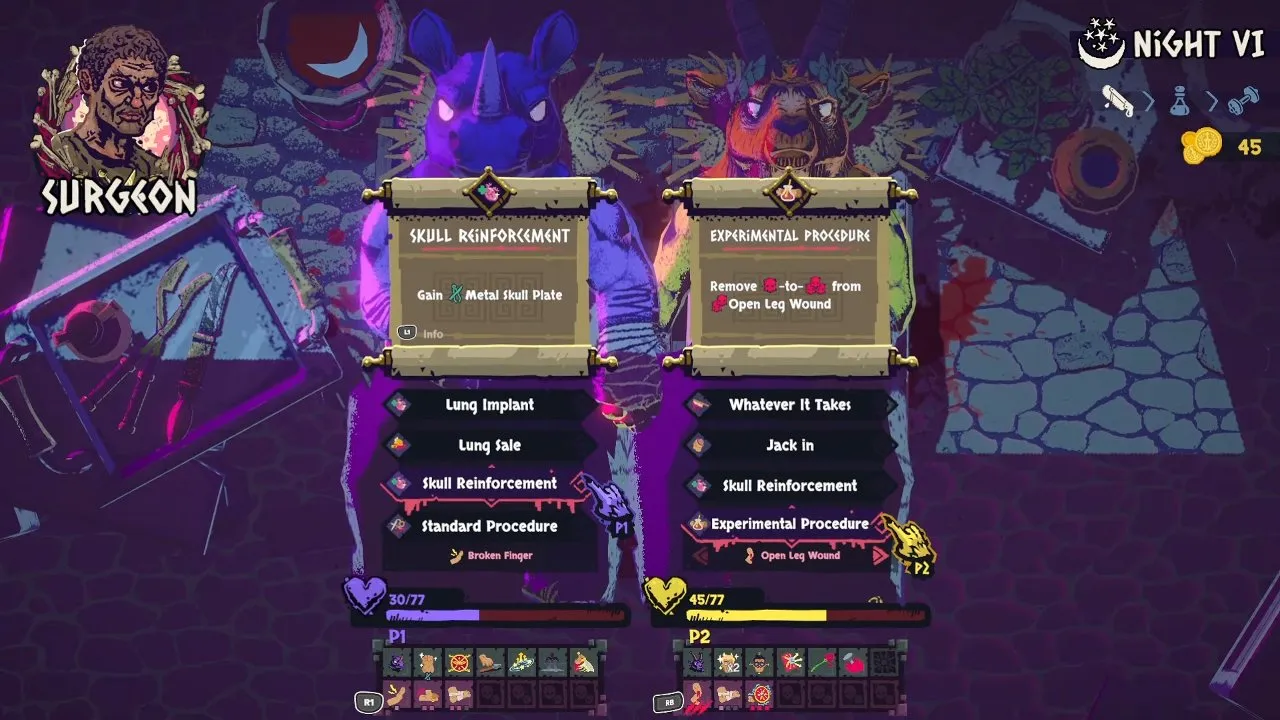
A paid procedure to remove a leg wound is another possible offer. If a specific injury keeps ruining your movement, favor an offer that directly addresses it when its cost suits your run.
Exchange existing injuries for an unknown affliction
Another possible offer cures Open Leg Wound and Bad Vibrations but gives you an unknown level III affliction. You clear those named problems while accepting a new drawback you cannot choose by effect.
Prefer targeted treatment when you already know which restriction is hurting your playstyle. The exchange is a gamble: removing familiar problems can leave you with a different severe restriction.
Does Vigor let you ignore afflictions?
The Trainer skill Push through the Pain lets you ignore afflictions during Vigor. At the skill choice, look for that name and the text “Ignore afflictions during vigor.”
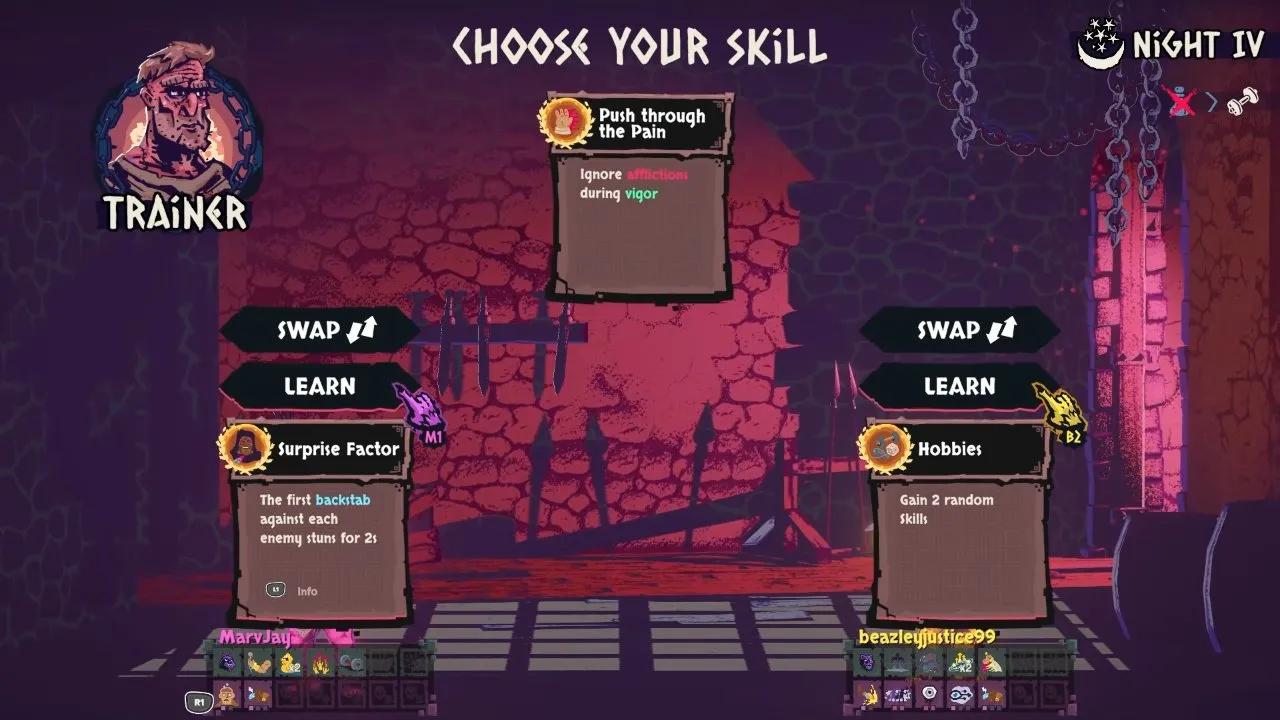
This relief lasts during Vigor. Keep planning around your afflictions outside that window; the skill does not remove them.
To keep Vigor running longer, read Chained Beasts Vigor.